
Stop Using LangChain for Everything: The 10 Agentic Frameworks You Need in 2026
Top 10 Agentic AI Frameworks to build AI Agents in 2026 (with Resources)


Hello guys, Agentic AI, systems of autonomous agents that plan, act and coordinate is shaping up to be one of the most important trends in AI development.
Frameworks that enable multi-agent orchestration, tool integration, memory, reasoning and collaboration are now becoming critical skills for engineers and developers.
But before that, shout out to Paul Iusztin for his amazing Agentic AI Engineering Course, If you’re serious about Agentic AI, this is the course you’ve been waiting for.
This course takes you from fundamentals to production-ready agents with real-world projects, evaluation frameworks, and deployment pipelines.
Perfect for engineers who want to move beyond demos.
Here is the link to join this course - Agentic AI Engineering (aff) by Paul Iusztin

And, now, here are 10 frameworks you should be familiar with in 2026 and for each one, I’ve added a recommended Udemy courses to get you up to speed.
1. AutoGen (Microsoft)
An open-source, multi-agent framework from Microsoft designed for scalable agent systems, inter-agent communication and orchestration.
Recommended course: Building AI Agents & Agentic AI Systems via Microsoft AutoGen
Why: Hands-on with AutoGen, ideal for engineers wanting to build real agent workflows.

2. CrewAI
Designed to orchestrate teams (or “crews”) of agents, CrewAI simplifies multi-agent collaboration, tool use and large-scale agentic systems.
Recommended course: The Complete Agentic AI Engineering Course (2025)
Why: Covers both CrewAI and AutoGen, great for beginners-to-intermediate looking at multi-agent frameworks.

3. LangChain
While originally more workflow-oriented, LangChain increasingly supports agentic AI patterns (tool + agent orchestration, memory, chains).
LangChain allows developers to quickly integrate Large Language Models (LLMs) like GPT into applications, enabling features such as natural language understanding, text generation, and AI-powered automation.
It simplifies the complex processes of model integration and accelerates AI app development, making it a go-to framework for creating LLM-powered applications.
Recommended course: LangChain — Develop LLM Powered Applications with LangChain

4. LangGraph
A graph-based framework for modelling multi-agent workflows and dependencies, suited for complexity and scale.
LangGraph builds on LangChain’s capabilities and introduces the concept of AI agents. These agents can autonomously carry out tasks, making decisions based on user input and real-time data.
This makes LangGraph essential for developing more interactive, autonomous systems that can manage workflows or even communicate with other systems.
Recommended course: LangGraph Mastery: Develop LLM Agents with LangGraph

5. LlamaIndex (formerly GPT-Index)
LlamaIndex provides a powerful way to bridge the gap between LLMs and your data. While large models like GPT-4 or LLaMA are incredibly capable, they don’t know your company’s internal documents, private datasets, or custom knowledge bases.
LlamaIndex helps you create pipelines to ingest, index, query, and retrieve data, allowing LLMs to reason over your specific information.
This framework simplifies Retrieval-Augmented Generation (RAG) architectures, making it easier to enhance accuracy, reduce hallucinations, and add context-awareness to your AI applications.
With LlamaIndex, you can rapidly build tools like custom chatbots, search engines, or AI agents that work on your own data — and do it at scale.
Not purely an “agentic” framework but increasingly used in agent workflows for retrieval, memory, tool integration.
Recommended course: LlamaIndex Develop LLM powered apps (Legacy, V0.8.48)

6. Hugging Face Transformers Agents
Hugging Face’s Transformers library provides a simple and powerful API for accessing over 100,000 pre-trained models for tasks like text classification, question answering, translation, summarization, and more.
With seamless support for TensorFlow, PyTorch, and JAX, it has become the go-to toolkit for developers, data scientists, and researchers working in NLP and beyond.
The agentic extension of Hugging Face’s library, enabling agents that use transformer models in complex workflows.
Recommended course — Learn Hugging Face Bootcamp

7. Semantic Kernel (Microsoft)
Microsoft’s Semantic Kernel (SK) is one of the most enterprise-ready frameworks for building agentic AI systems. It allows developers to easily connect large language models (LLMs) like GPT-4 with real-world tools, data sources, and APIs.
What sets SK apart is its focus on tool-enabled LLMs, function calling, semantic memory, and planning/chaining mechanisms, which make it ideal for orchestrating autonomous workflows in business environments.
It integrates deeply with the .NET ecosystem, Python, and even JavaScript — allowing both backend and full-stack engineers to prototype and deploy intelligent agents quickly.
If you’re working on enterprise applications where AI needs to reason, plan, and act across multiple services, Semantic Kernel is a must-learn framework in 2026.
Here’s a great Udemy course to start: Mastering Semantic Kernel by Creating Projects

8. RASA (Agentic Conversational Agents)
RASA has long been a powerhouse for building contextual chatbots and conversational AI, but in recent years, it has evolved into a more agentic conversational framework.
With RASA Pro and its new open-source components, you can now integrate LLMs, external APIs, and reasoning layers to create hybrid agents by combining deterministic dialogue management with LLM-driven intelligence.
It remains a top choice for teams building customer service agents, voice bots, or AI assistants that must maintain consistent state and memory across interactions.
Developers can also extend RASA pipelines with retrieval-augmented generation (RAG) and tool execution to make agents more autonomous.
And, if you need a course, a good starting point is: The Complete Course of Rasa Chatbot

9. Atomic Agents
Atomic Agents is an emerging open-source framework designed for decentralized, multi-agent systems. Unlike traditional centralized frameworks, it enables many agents — each with specialized goals — to coordinate tasks in a distributed fashion.
This architecture is particularly useful for complex environments like simulation, large-scale automation, and research collaborations where agents must communicate and negotiate.
The focus on decentralization makes Atomic Agents highly scalable and resilient, positioning it as a promising player in the evolution of agentic AI.
Developers exploring Web3, blockchain, or distributed computing can benefit significantly from learning how Atomic Agents work.
Learn more here: Build GenAI & Multi-Agent Systems Tools for Software Testing

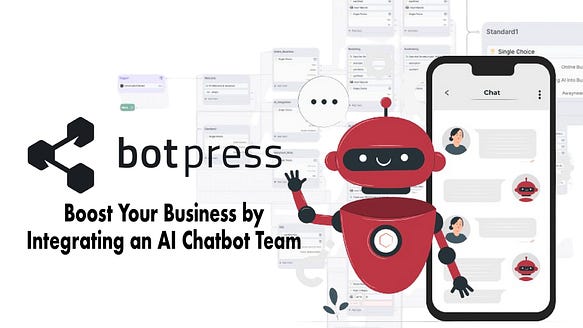
10. Botpress (Agentic Platform)
Botpress has transitioned from a traditional chatbot builder into a full-fledged agentic AI platform. The latest versions allow you to build agents that reason, call tools, and orchestrate multi-step workflows — all within a no-code or low-code interface.
It supports advanced integrations with APIs, databases, and vector stores, allowing you to combine structured logic with LLM-based decision-making.
For organizations and teams looking to deploy scalable, secure AI agents without heavy engineering overhead, Botpress offers the perfect balance of accessibility and sophistication.
Its open-source foundation and plugin ecosystem make it ideal for developers and non-developers alike.
Why This Matters in 2026?
Agentic AI is no longer academic — it is moving into mainstream applications: automation workflows, tool-enabled assistants, and autonomous decision-making systems.
Understanding these frameworks gives you an edge as the AI ecosystem shifts from single-model prompts to multi-agent orchestration, collaboration, and deployment.
Choosing the Right Framework
For multi-agent orchestration: AutoGen, CrewAI, LangGraph
For tool-enabled agents & workflows: LangChain, Semantic Kernel
For distributed/decentralized agents: Atomic Agents, Botpress
For retrieval/memory-centric agents: LlamaIndex, Hugging Face Agents
Pick the framework that aligns with your goal, stack, and use case — then follow up with one of the Udemy courses listed to deepen your skill.
By the way, if you want to join multiple courses on Udemy then you can also checkout Udemy’s Personal Plan, where you get access to best of Udemy’s 11000+ courses for a monthly fee of $30.
If you want to join multiple courses then Udemy Personal Plan is actually a better deal. You can also try for free for 7 days to get a feel of it.

So, what are you waiting for? Pick a course, start learning, and join the AI revolution!
Happy Learning!
Thanks for reading this article so far. If you find these Udemy Courses for learning Microsoft Autogen framework for building AI Agents then please share with your friends and colleagues. If you have any questions or feedback, then please drop a note.
P. S. — If you are a complete beginner on Agentic AI then I also recommend you to first go through a comprehensive course like The Complete Agentic AI Engineering Course, I highly recommend that to anyone who want to start with Agentic AI in 2026, and if you need books you can also check my previous article.